
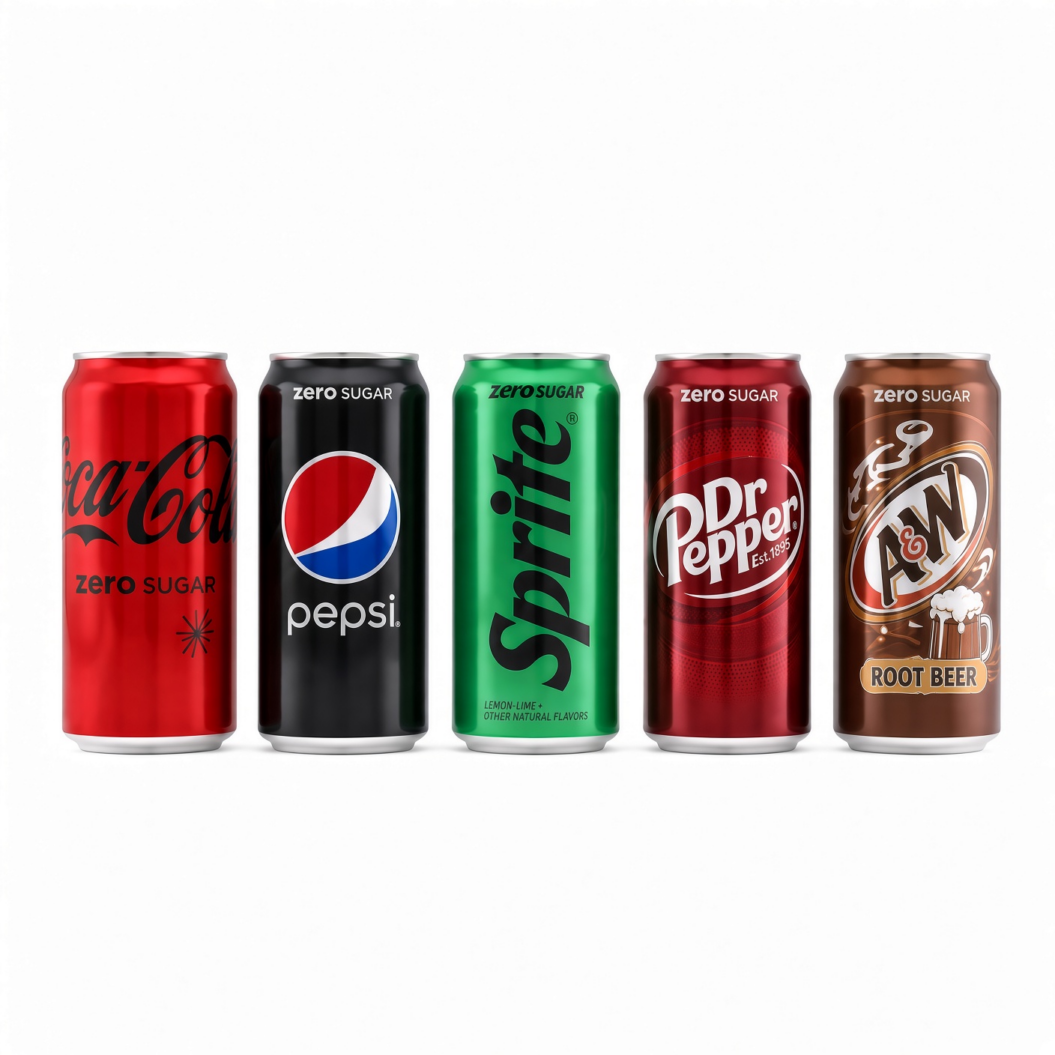
If you switched from regular soda to a diet or zero sugar version to cut calories, you have probably also seen a headline telling you those drinks are linked to stroke, dementia, or weight gain. So which is it?
Here is what the research actually says — and what it does not.
First: “zero sugar” and “diet” are the same question
Most of the big brands have moved from “diet” to “zero sugar” labelling, and these are now the most popular versions on the shelf. It is worth knowing that this is mostly a change in marketing, not in chemistry. Zero sugar drinks still get their sweetness from the same family of artificial sweeteners — usually aspartame, sucralose, or acesulfame potassium, often two of them together. So when you read about “diet soda” research, it applies to your zero sugar can too.
What the studies found
In 2017, researchers following participants in the Framingham Heart Study reported that people who drank artificially sweetened soft drinks — diet or zero sugar — daily had a higher rate of stroke and dementia over the following decade than people who drank none.
That sounds alarming, and it made a lot of headlines. But there are two things worth understanding before you pour out the Coke Zero.
First, this kind of study can show a link, not a cause. It observed what people drank and what happened to them later. It cannot tell us whether the drinks caused anything.
Second, and more importantly: the same study found no such link for regular, sugar-sweetened soda. If artificial sweeteners were straightforwardly harmful, that is a strange result. A more likely explanation is what researchers call reverse causation — people who already have diabetes, obesity, or heart disease are exactly the people most likely to have switched to diet drinks in the first place. The higher risk may have come with them, rather than from the can.
The study was also small in the way that matters: fewer than 100 strokes and fewer than 100 dementia cases among the participants analyzed.
What has changed since then
Two updates are worth knowing:
- 2023 — the World Health Organization advised against using non-sugar sweeteners for weight control. After reviewing the evidence, WHO concluded that these sweeteners — synthetic and plant-derived alike — do not appear to help with long-term weight loss. Notably, WHO called this a conditional recommendation based on low-certainty evidence — meaning the science is suggestive, not settled.
- 2023 — aspartame was classified as “possibly carcinogenic to humans” (Group 2B). This is the third of four levels and reflects limited evidence. In the same announcement, WHO’s expert committee reaffirmed the existing acceptable daily intake and stated that safety “is not a major concern at the doses which are commonly used.”
In other words: there is enough smoke here to be thoughtful, and not enough fire to panic.
One point worth making about stevia: because it comes from a plant, people often assume it sits outside this conversation. It doesn’t. WHO’s guidance covers non-sugar sweeteners as a group — stevia included — not just the synthetic ones. “Natural” on the front of a package is a marketing word, not a health claim.
Know what you are drinking
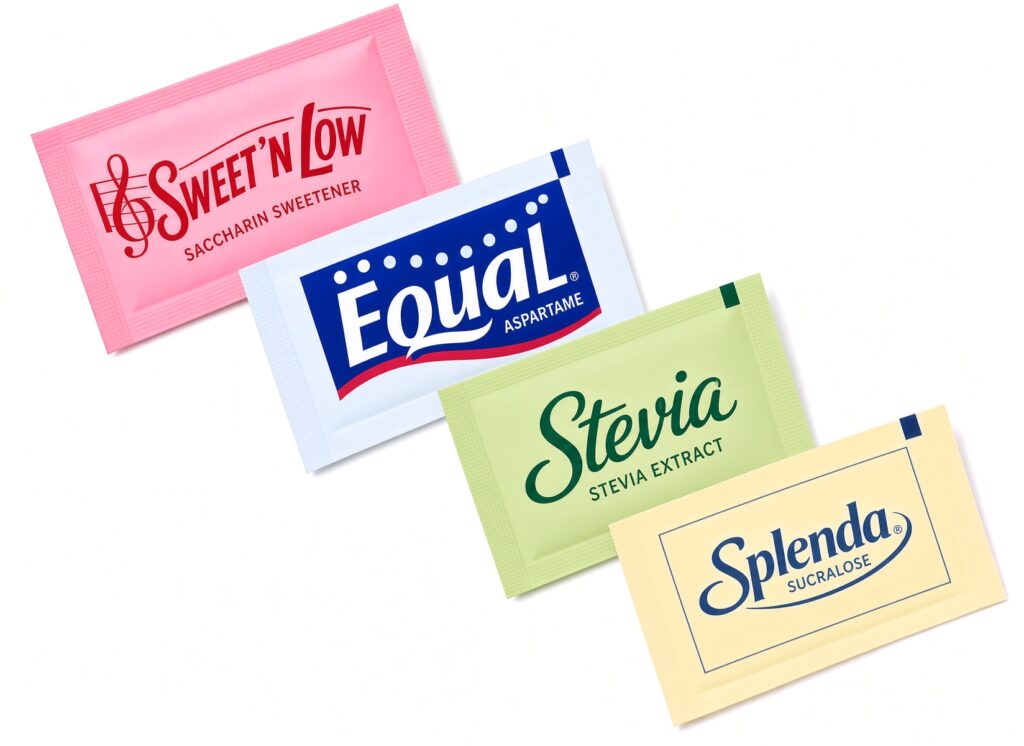
Sweeteners usually appear on labels under their chemical names rather than the brand you recognize:
- Saccharin — Sweet’N Low
- Acesulfame potassium — Sweet One
- Aspartame — Equal, NutraSweet
- Sucralose — Splenda
- Stevia (stevia leaf extract, rebaudioside A) — Truvia, Stevia in the Raw, and many store brands
What we tell our patients
We are not going to tell you that one diet soda is going to give you dementia, because the evidence does not support that. What we will say is this:
Sugar is not our friend. That much has been clear for a long time — it raises the risk of diabetes and obesity. And swapping sugar for artificial sweeteners — whether the can says “diet” or “zero sugar” — does not appear to deliver the weight-loss benefit people hope for.
So rather than trading one sweetened drink for another with different branding, we would rather see you get back to basics: eat foods in their most natural, God-made forms, and drink more of the lowest-calorie option there is — water.
If you have diabetes, talk with us before you change how you use sweeteners. The tradeoffs are different when blood sugar control is part of the picture.
Want help with this?
Diet changes are easier with a plan and someone in your corner. We offer medication-assisted weight loss and work with patients on nutrition, blood sugar, and reducing medications through diet — you can read more about our weight loss and nutrition services.
As always, contact our office for any of your healthcare needs. We are passionate about keeping you healthy!